Save with group discounts! See More

Save with group discounts! See More
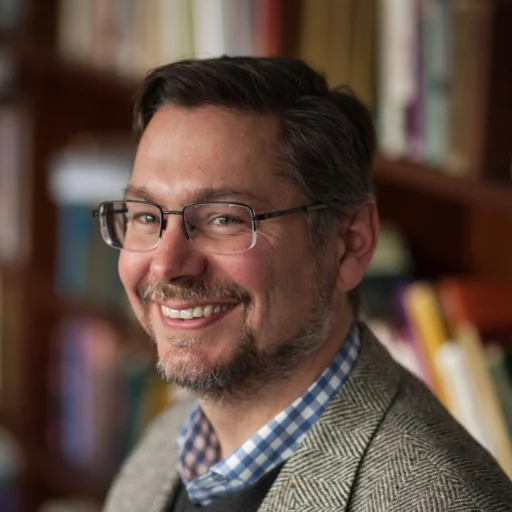
Andrew Kern is the founder and president of the CiRCE Institute (Center for Independent Research on Classical Education), the husband of Karen, the father of five grown adults, and the grandfather of too many grandchildren to keep up with.
He has been researching, speaking, teaching, and consulting in the Christian classical renewal since 1993, during which he has been instrumental in the founding of three schools (Ambrose School in Boise, ID, Providence Academy in Green Bay, WI, and Great Ideas Academy in Charlotte, NC), consulted with well over 100 schools and co-ops, and served as Director of Classical Instruction, Academic Dean, and Headmaster. Andrew speaks regularly at home school and classical education conferences in the US and around the world.
In addition, he is the author of Unless The Lord Builds the House: Shared Foundations for Christian Education, co-author with Dr. Gene Edward Veith of Classical Education, The Movement Sweeping America and, with Andrea Lipinski, of The CiRCE Guide to Reading. He also led the development of CiRCE’s classical rhetoric program, The Lost Tools of Writing, and he loves Homer, Shakespeare, Anne of Green Gables, and Endeavour. Like Shakespeare, he knows a little Latin and less Greek. Except a lot less than Shakespeare.
All learning is imitation. This talk describes three powerful modes of imitation — narration, dictation, and copy work — that grammar school students can use to cultivate memory, creativity, reading, writing, and insight as early as kindergarten.
Imitation is a core principle of classical Christian paideia. Participants will receive an overview of three modes of teaching to cultivate memory, creativity, reading, writing, and insight as early as kindergarten.
Glory First Teaching explores how the pattern of the heavenly temple serves as the pattern for all effective teaching. The talk argues that education begins and ends with the glory of God: first we see the glory, then we desire union with it, then we seek to understand its principles, and finally we share and apply what we’ve learned. God has woven this pattern into the human soul and the creation and, therefore, every lesson.